How underwater cameras and sensors systems are actively helping crews make smarter, more sustainable decisions about how they fish
In this SAFET blog series, we spotlight the organizations behind the global technology success stories highlighted in our Sea Tech in Motion project map. We recently connected with Tom Rossiter, CoFounder of CatchCam Technologies, to discuss how durable camera systems and advanced sensors are enabling reliable data collection in challenging underwater environments.
SAFET: At a high level, what inspired you to develop CatchCam Cameras and SeaSensors?
Tom Rossiter: Quite simply, we realised that we still don’t fully understand what is happening in our oceans. Without that understanding, it becomes very difficult to manage marine environments properly.
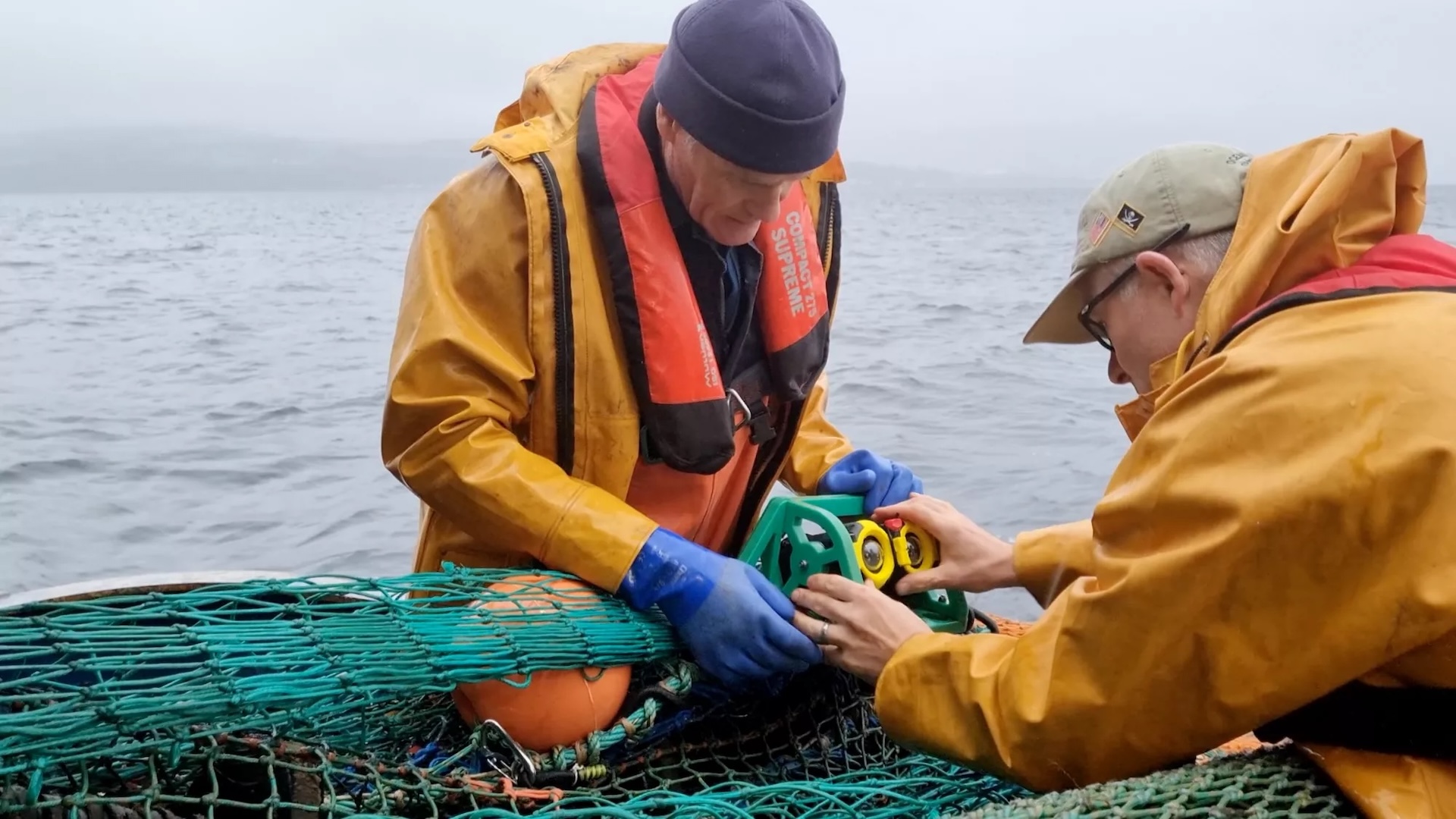
At CatchCam, we believed our technical experience could help fill that gap. Our goal was to build tools that work not only in ideal research conditions, but also in the harsh reality of day-to-day life at sea. Equipment used by fishers and scientists has to survive saltwater, rough handling, tides, and long deployments — so reliability is critical.
That’s really what inspired us. We saw a need for better insight and information about what is happening underwater. CatchCam cameras provide the visual evidence, showing what is happening around fishing gear or marine habitats, while SeaSensor systems collect environmental data remotely.
Together, these tools allow us to gather information that, in many cases, simply does not exist today. Once you start seeing what is actually happening underwater and combining that with environmental measurements, you suddenly have a much clearer picture of how marine systems behave.
SAFET: How do these tools work? Do they relay real-time signals, or do they record data locally?
Tom Rossiter: The answer is that they can do both. It really depends on the application and what the user needs.
Real-time communication is technically possible, but it is more challenging underwater. With SeaSensor, the amount of data is relatively small, so we can use acoustic transmission to send information through sound waves underwater. In some cases we can even transmit still images this way.
If higher data rates are required — for example with live video — we typically use a cable connection. That might be a copper cable for shorter distances, or fibre optic for longer ranges. These systems allow live feeds to reach the surface in real time.
However, cables are not always practical. The marine environment is tough, and cables can become tangled, damaged, or caught on gear. Because of that, many deployments simply record the data locally. The system is deployed, it collects information while underwater, and then the data is downloaded when the unit is recovered.
In practice, this “deploy and recover” approach is often the simplest, most reliable, and most cost-effective option.
SAFET: How do CatchCam Cameras and SeaSensor complement each other?
Tom Rossiter: The two technologies complement each other because they measure different things.
The camera shows you what is happening visually. You can observe fish behaviour, see how fishing gear operates, and understand how equipment moves or reacts to tides and currents. For example, you might watch how a net settles on the seabed or how fish interact with a trap.
SeaSensor, on the other hand, measures the things you cannot see. It records environmental parameters such as temperature, salinity, turbidity, or light levels.
When you combine the two, you start to build a much richer understanding of the environment. You can see what is happening and also measure the conditions that may be influencing that behaviour.
Which system you use really depends on the question you are trying to answer. Sometimes a camera alone is enough, sometimes a sensor is sufficient, but quite often you need both together to truly understand what is happening underwater.
SAFET: How have fishers used CatchCam tools in real-world fisheries?
Tom Rossiter: One of the most valuable things CatchCam provides is simple visibility. Fishers have rarely seen their gear operating underwater, so being able to observe it directly provides important context.
When fishers can see how fish behave around their gear, they can begin to refine it. That might mean improving how the gear catches the target species, allowing smaller fish to escape, or avoiding unwanted species altogether. In many cases the best solution is to prevent unwanted fish entering the gear in the first place.
Environmental data from SeaSensor then helps explain why certain behaviours occur. For example, changes in temperature, light levels, or turbidity may influence how fish move or how they interact with gear. Understanding these relationships helps fishers make more informed decisions.
We have seen this across several case studies. In scallop pot fisheries, for example, cameras helped show how scallops respond to light used as an attractant. At the same time, sensors measured the light intensity and environmental conditions influencing their behaviour.
In seine net fisheries, the camera showed how the gear settled on the seabed, while the SeaSensor provided precise measurements of how quickly the net reached the bottom and how tidal conditions affected its final position.
These kinds of insights allow fishers to fine-tune their gear, improve efficiency, and reduce unwanted catch.
SAFET: Can you share any surprises or “aha” moments in these deployments?
Tom Rossiter: Almost every time you put a camera underwater there is an “aha” moment. We are looking into a world that humans rarely see, so there is always something new to learn.
One example came from a project in Finland involving perch traps. At one point a large pike entered the trap and moved it around quite dramatically. Given the size and shape of the fish, you would expect it to remain trapped.
But after feeding on the fish inside, it somehow managed to escape. Watching the footage back, it almost looked like the fish simply swam through the structure of the trap — something you would not have believed without seeing it.
Moments like that remind us how much we still have to learn about underwater behaviour.
SAFET: What is your big-picture vision for how these tools may be used to support the future of sustainable fisheries?
Tom Rossiter: The big idea is ‘precision fishing.’
By combining visual observation with environmental data, fishers can better understand what is happening around their gear and make smarter decisions about how they fish. That means catching the species they want more efficiently while reducing unwanted catch and environmental impact.
But the opportunity goes beyond fishing alone. We are also working to ensure the data collected can support science and fisheries management — while still respecting that the people collecting the data should control how it is used.
Our vision is simple: collect the data once and allow it to be used many times. When the fishing industry, scientists, and managers all learn from the same reliable data, it becomes much easier to make better decisions for the future of sustainable fisheries.