Get Involved
Call for speakers, panellists and moderators
Contribute to the Program
We are seeking speakers, panellists and moderators to lead roundtable sessions, with a strong contribution from technology providers, alongside representatives from industry, government, fishing communities, research and civil society. Contributions should align with our core themes: Responsible Fisheries and Governance, Market Dynamics and Fair Value, and Livelihoods and Coastal Communities.
We welcome perspectives from those developing tools, those implementing them in practice, and those who can speak to their impact, challenges and outcomes. Contributions should be grounded in real-world experience and support open, constructive dialogue across the sector.
Share Your Solution
SAFET offers a platform to present work in context. Whether developing new approaches or applying in practice, this is an opportunity to demonstrate through multiple opportunities at the event, from on stage lightning tech demos to fireside chat contributions, round table discussions, exhibiting and main stage themed presentations.
We also encourage participation from organisations that use, support or can speak to the role and impact of these technologies across fisheries and supply chains.
Timeline for submissions:
- 9th June – submission deadline. Please reach out to conference@safet.fish if you cannot meet this date.
- 19th June – review of submissions complete.
- 26th June – announcement of programme and speakers.
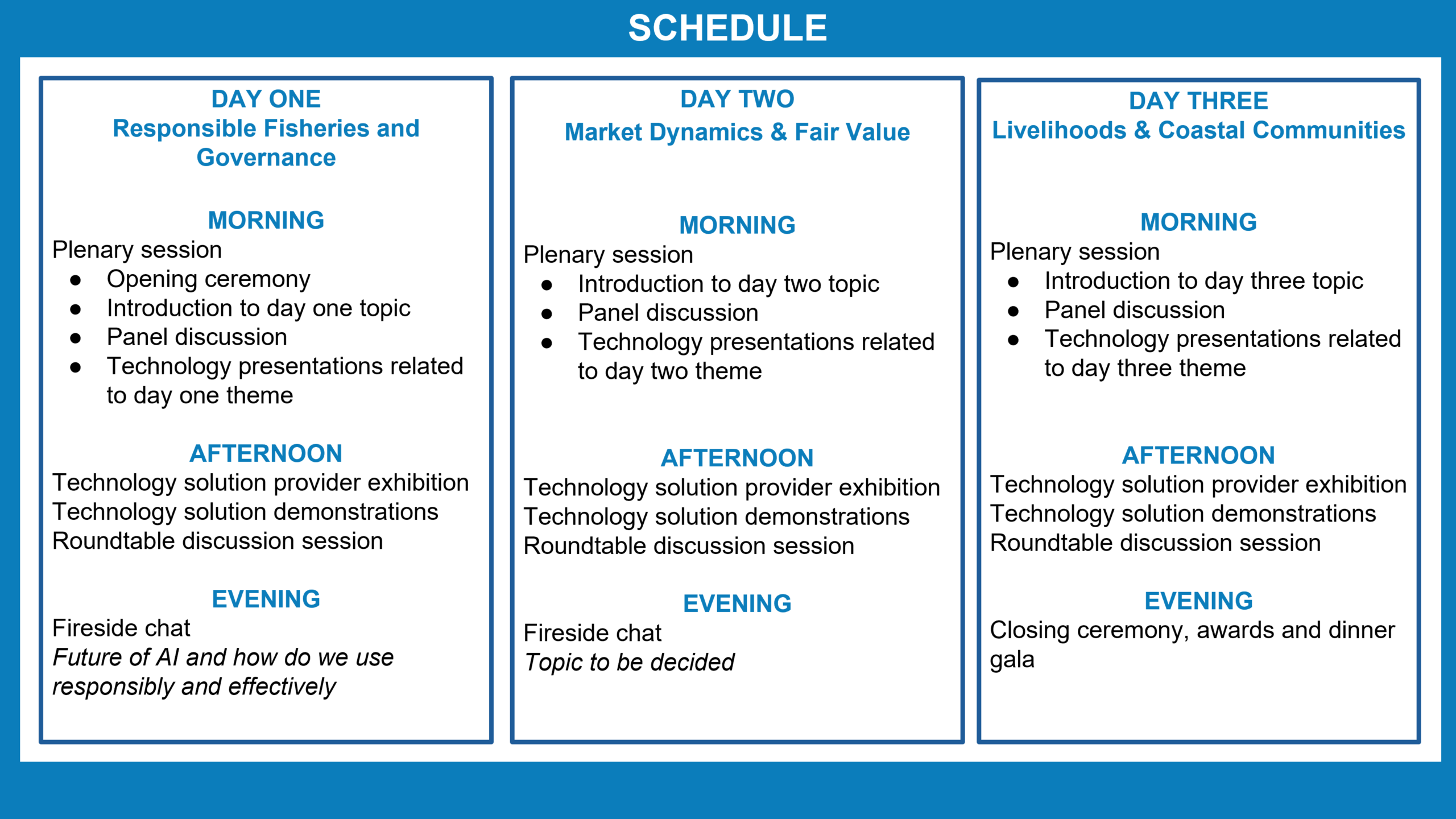
Responsible Fisheries and Governance
Strong governance and responsible fisheries management are essential to a healthy ocean, sustainable seafood supply and resilient coastal communities. However, challenges remain globally, including illegal, unreported and unregulated fishing, limited transparency, gaps in monitoring and reporting, and increasing pressures from climate change. Strengthening oversight, improving data systems and reinforcing compliance mechanisms are critical to supporting sustainable fisheries and meeting national, regional and international commitments.
Day one will explore how existing and emerging technologies can strengthen fisheries oversight, improve transparency and support more effective management. Topics may include technology solutions to deter illegal, unreported and unregulated fishing, digital monitoring and reporting tools, and the use of scientific data to support evidence-based decision making. Discussions may also consider the role of technology in supporting implementation of international frameworks such as the BBNJ Agreement, as well as examples of technology enabled monitoring and compliance in Marine Protected Areas.
Additional topics may include digital traceability across seafood supply chains, climate related fisheries solutions and the integration of innovative monitoring tools into national fisheries management systems.
The session will also highlight priority initiatives from BFAR that support responsible fisheries governance and sustainable ocean management in the Philippines.
Market Dynamics and Fair Value
Transparent and efficient seafood markets are essential to ensuring that responsible fishing practices translate into fair economic returns for fishers and seafood producers. Global key challenges include supply chain transparency, verification of responsible fishing practices, and ensuring that the value of sustainably harvested seafood is reflected in market access and pricing. As sustainability expectations continue to evolve across international seafood markets, improving transparency, trust and information flow across supply chains is increasingly important.
Day two will explore how technology, data and improved supply chain transparency can strengthen market confidence, support responsible sourcing and help ensure value flows more equitably across the seafood sector. Topics may include digital traceability systems linking catch to consumer, electronic monitoring and reporting tools that verify responsible fishing practices, and data platforms that support market access and compliance with international seafood standards. Discussions may also consider how these tools support transparency and verification in globally traded fisheries such as tuna.
Additional topics may include market incentives for sustainable fisheries, technologies that improve supply chain visibility, and approaches that help ensure fishers and coastal communities receive fair value for responsibly harvested seafood.
The session will also highlight relevant priorities and initiatives from BFAR that support sustainable seafood markets and economic opportunities within the Philippine fisheries sector.
Livelihoods and Coastal Communities
Livelihoods and Coastal Communities
Small scale fishers and coastal communities are central to the fisheries sector, with livelihoods, local economies and food security closely linked to the health of marine ecosystems and seafood markets. For many communities, fishing provides employment, income and an important source of nutrition. Fishers and coastal workers are also navigating changing environmental conditions, evolving market requirements and increasing expectations for participation in fisheries governance. Strengthening resilience, opportunity and fair participation is therefore essential to supporting sustainable coastal livelihoods.
Day three will explore how technology, innovation and inclusive fisheries management approaches can support fishers, strengthen community resilience and create sustainable economic opportunities across coastal regions. Topics may include technology solutions for small-scale and municipal fisheries, digital tools that improve access to fisheries information and reporting, and innovations that support safer and more efficient fishing operations. Discussions may also consider community led fisheries stewardship, equitable access to marine resources, and the use of data and monitoring technologies to support local decision making and participation in responsible fisheries and seafood supply chains.
Additional topics may include climate adaptation for fishing communities, labour rights and safe working conditions across the fisheries sector, and technology that supports safety at sea and sustainable fishing practices. The session may also explore initiatives that strengthen livelihoods through improved market access, transparency and value creation.
Day three will also highlight relevant priorities and programmes from BFAR and partners that support coastal community development and fisheries livelihoods in the Philippines.
Join the Conversation
SAFET brings together a global community to exchange ideas, share experience and build a clearer understanding of what works.
Be part of a collective effort to shape practical, informed progress across seafood and fisheries.